Getting a Second Season Out of One Trellis
The same frame that held a bean run through summer can hold a row cover through the first frost, if you add a hoop instead of a second trellis.
September 17, 2026 · 3 min read
A trellis that only earns its keep for twelve or fourteen weeks a year is doing half a job. The same frame that carried a run of pole beans through summer can carry a row cover through the shoulder seasons, and the piece that makes the switch possible is the hoop, not a second trellis.
What the summer run looks like
The Trellis Fence (PS008062) is built for pole beans, tomatoes, cucumbers, peas, and squash, 90.5 by 15.75 by .375 inches and 4.4 pounds, narrow enough that it also works as a garden shelf when you are not using the full width for climbing plants. Run a length of these along your bean row through the warm months and you have exactly the kind of vertical support a climbing crop needs to stay off the ground.
Turning the same footprint into a cold frame
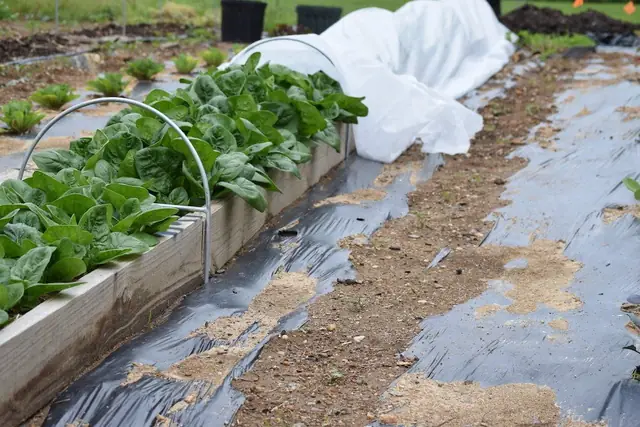
Once the beans are done, the Trellis Fence Hoop (H008024) works with the same frame footprint, 29 by 16.75 by .375 inches and 2.84 pounds, arching over the row to hold row cover or plastic sheeting above the plants underneath rather than resting directly on them. That gap is what protects tender growth from a light frost without crushing it, the same principle greenhouse growers use at a much larger scale. If you want more headroom under the cover, the Tubular Trellis Frame Base (T008031) adds height, 36 inches installed, and is built to work with both the hoop and the Medium Size Trellis (T008017).
This is what "cold snaps" means in practice: a night or two of frost warning in early fall, or a stretch of cool nights in early spring before you would normally risk transplanting. Row cover over a hoop can buy you real weeks on both ends of a season for crops like spinach and other cool tolerant greens, without building a permanent structure you have to work around the rest of the year.
The same Trellis Fence Frame (T008000) that anchors a summer row is described in our own catalog as suited to "universal trellises, fences, raised beds cold frames, potting benches, and more," which is really just another way of saying the frame does not know or care what season it is being asked to work in. Leafy greens like spinach, which show up throughout our own garden photos growing under exactly this kind of hoop and row cover, are a good example of a crop that benefits from the cold frame conversion more than from the trellis itself, since spinach does not climb but does appreciate the few extra degrees of protection a cover provides.
If you are working with straw bale beds rather than open soil, the same frame and hoop pieces still apply. The frame's 16 inch depth works into a bale bed's growing medium the same way it works into open ground, and the hoop clips onto the frame regardless of what is underneath it.
Why it works with one set of pieces
The whole point of a modular system is that the frame in the ground does not care what is attached to it above ground. The same posts that held bean netting in July hold a hoop and row cover in October, and come spring they are back to holding netting again. JE, who bought three units for tomatoes and beans, wrote that they were "easy to set up, rugged, and better than anything I have used before," and that same durability is what carries a row from one season use into two.
If you already have a summer trellis run in the ground, adding hoops is the cheapest way to get a second season out of it. Check the Products page for hoop and base sizing before your next frost warning.
Garden Trellis and Fence Company, (833) 842-7336
Call (833) 842-7336More articles
Why Tomato Cages Fail, and What Actually Holds a Full Crop
Wire cages tip over because nothing about them is actually anchored. Here is what holds a full tomato crop instead.
Setting a Trellis Frame So It Stays Put
Sixteen inches of a ninety five inch frame goes into the ground. Skip that depth and the rest of the system has nothing to stand on.