Setting a Trellis Frame So It Stays Put
Sixteen inches of a ninety five inch frame goes into the ground. Skip that depth and the rest of the system has nothing to stand on.
September 17, 2026 · 3 min read
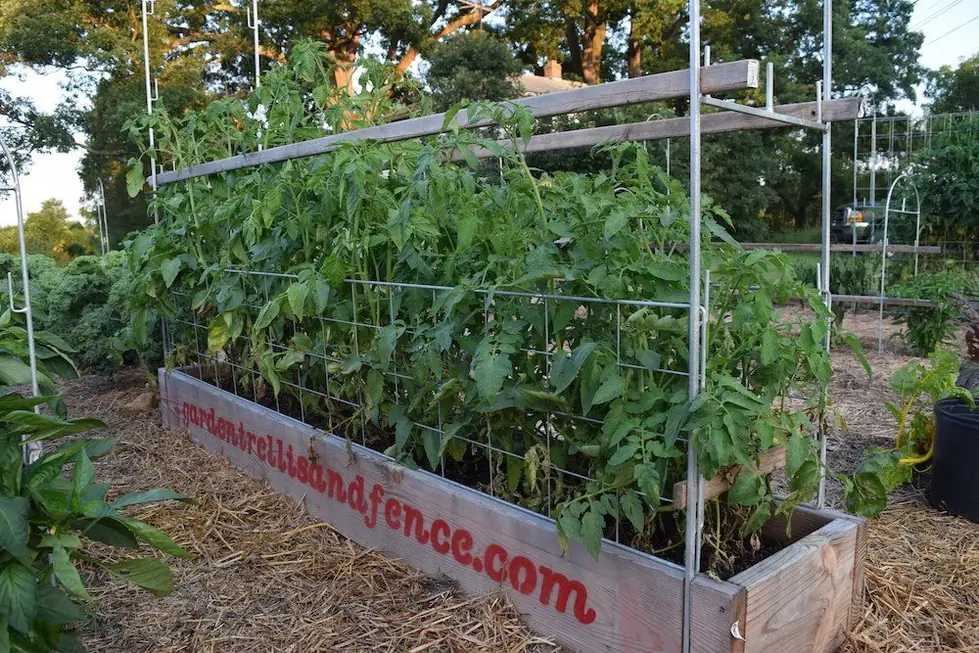
Every one of our trellis frames is built to the same basic proportion. Sixteen inches goes into the ground, 79 inches stands above it, out of a 95 inch overall length. That is not an arbitrary number. It is the depth that keeps a flat steel panel from working itself loose over a season of wind, rain, and the steady pull of a heavy vine.
What a shallow post actually fails at
A flat panel catches more wind than a round cage does, the same way a fence panel catches more wind than a chain link post. Set a frame too shallow and every gust pushes harder against the buried section, rocking it a little wider each time until the ground around the base loosens and the whole frame starts to lean. The failure is rarely sudden. It is a slow widening of the hole around the base until one windy week finishes the job.
Getting the depth right
Both the Trellis Fence Frame (T008000) and the Medium Size Trellis (T008017) share the same 95 by 16.75 by .375 inch dimensions and the same 16 inch in ground depth, 9.88 pounds each. Dig or drive to that full depth before you call the frame set, even if the soil looks firm at 10 or 12 inches. The extra few inches is what keeps the frame acting like a fixed post instead of a lever once panels, plants, and wind load are added on top of it.
Soil that has been recently turned or tilled will not hold a frame as well as soil that has settled, so where you can, set frames a few days ahead of planting rather than the same afternoon, and firm the soil back around the base by hand once the frame is in. If you are working a raised bed, the same 16 inch depth applies inside the bed's own soil, not measured from the top of the bed frame.
Once a frame is set, give it a firm push near the top before you call it done. A properly set frame should resist that push with almost no movement at the base. If you feel the base rock even slightly, the hole is not packed tightly enough yet, and it is worth backfilling and tamping again before you hang a panel on it. Checking this while the frame is still bare, before any panel or plant is attached, is much easier than diagnosing a lean after the row is already planted.
Keeping a row level
Where you are setting more than one frame in a row, run a string line or a straight board across the tops before you finish backfilling each one. Because every Trellis Fence Frame (T008000) and Medium Size Trellis (T008017) is the same 79 inches once installed, a row where every frame reaches full depth will also stand level along the top, which is what lets panels sit flush against each frame rather than gapping at an angle.
One system, not one off posts
Because every frame in the lineup shares the same base dimensions, a row set correctly this year takes panels, hoops, or an extra base piece next year without redoing the groundwork. One reviewer, Kevin P, wrote that the owner personally delivered his trellis pieces and looked over his raised garden bed, offering setup recommendations, after first meeting him at a Home Garden show. That kind of attention to how a frame actually sits in your ground is exactly what the 16 inch depth is protecting. Get the depth right once, and the rest of the system, panels, hoops, and bases, all builds on a base that already stays put.
If you are planning a new row or bed this season, check the dimensions for each piece on the Products page before you dig, so you are not short a few inches once the frame is standing.
Garden Trellis and Fence Company, (833) 842-7336
Call (833) 842-7336More articles
Why Tomato Cages Fail, and What Actually Holds a Full Crop
Wire cages tip over because nothing about them is actually anchored. Here is what holds a full tomato crop instead.
Getting a Second Season Out of One Trellis
The same frame that held a bean run through summer can hold a row cover through the first frost, if you add a hoop instead of a second trellis.