What Galvanizing Actually Does
Hot dip galvanizing is not a marketing word. It is the reason a steel trellis can sit outside all winter and still be sound in spring.
September 17, 2026 · 3 min read
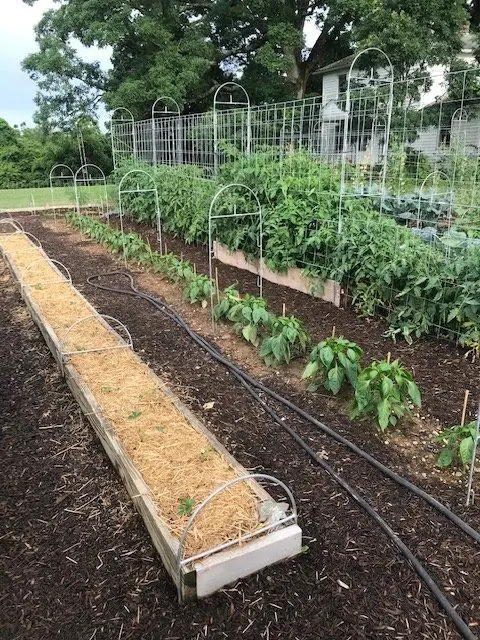
"Hot dipped galvanized" shows up in a lot of gardening product descriptions, and it is worth knowing what it actually means rather than treating it as a label. Our trellis frames and panels are solid A36 steel that goes through a hot dip galvanizing process, coating the steel in zinc by fully submerging it in a bath of molten zinc rather than spraying or plating a thin layer onto the surface.
A36 is a common structural steel grade, chosen for jobs that need to hold their shape under load without becoming brittle. It is a reasonable base material for something that has to stay rigid in the ground through wind, rain, and the pull of a loaded vine for years at a time, which is a different requirement than the thin wire most tomato cages are made from.
Why that stops rust
Zinc corrodes far more slowly than bare steel, and it corrodes in a specific, useful way. It forms its own protective layer as it weathers, and where the coating gets scratched, the surrounding zinc sacrifices itself first, still protecting the exposed steel underneath rather than letting rust spread from that scratch. A thin painted or plated coating does not do this. Once paint chips or a light plating wears through, the bare steel underneath is exposed and rust starts right there, which is why so many painted stakes and cages show orange rust spots within a season or two.
Hot dip galvanizing lays down a genuinely thick zinc coating, because the steel spends real time fully submerged in the molten zinc bath, letting the coating bond into the surface of the metal rather than sitting on top of it as a thin film. A quick electroplated finish, the kind that puts the shine on many hardware store stakes and cage wire, deposits a much thinner layer of zinc in a fraction of the time, which is exactly why that kind of finish wears through so much faster once it is out in real weather.
What it means for winter storage
Because the frames are not going to rust sitting outside, you get an actual choice about winter storage that untreated steel does not give you. Leave the frames standing in the bed over winter and they will still be sound in spring. Pull them, hose off the soil, and stack them in a shed or against a garage wall, and they hold up there just as well without needing oil, paint touch up, or a tarp to keep moisture off. Kevin P mentioned this directly in his review, saying the pieces were easy to "store much easier or leave out all year," which is the galvanizing doing exactly what it is meant to do.
Weight matters here too. A Trellis Fence Panel (P008055) is 5.72 pounds and a Trellis Fence Frame (T008000) is 9.88 pounds, light enough that a full season's worth of pieces stacks against a wall without needing a hand cart, and light enough to carry a load of them out to the garden in one trip come spring.
The long version of the same idea
The reason we describe these frames as giving "many years of dependable service" is the galvanizing, not the steel gauge alone. A36 steel with no coating would rust through in a fraction of that time outdoors. The coating is what turns a one or two season purchase into something you set up once and keep using, whether it stays in the ground all winter or gets pulled in and stacked until the next planting season.
If you are deciding between a coated and an uncoated support for next year's garden, the difference shows up less in the first season and more in the third and fourth, once an untreated piece has already rusted through. See the full lineup and specs on the Products page.
Garden Trellis and Fence Company, (833) 842-7336
Call (833) 842-7336More articles
Why Tomato Cages Fail, and What Actually Holds a Full Crop
Wire cages tip over because nothing about them is actually anchored. Here is what holds a full tomato crop instead.
Setting a Trellis Frame So It Stays Put
Sixteen inches of a ninety five inch frame goes into the ground. Skip that depth and the rest of the system has nothing to stand on.